
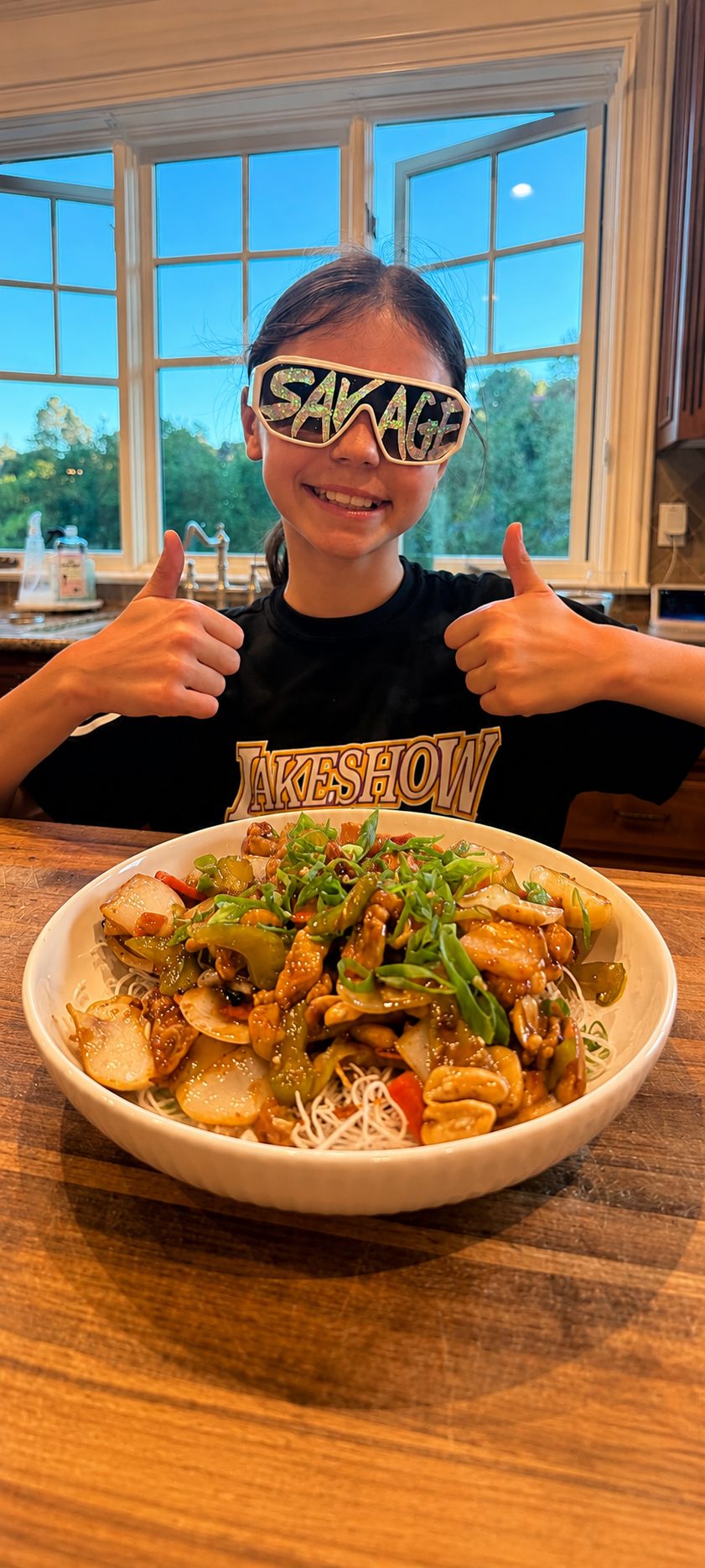
Wok This Way: Kung Pao Chicken
This Kung Pao Chicken is all about high heat and layers of texture. Tender marinated chicken gets a quick sear in a ripping-hot carbon steel wok, followed by crisp vegetables, dried chiles, Sichuan peppercorns, and our homemade Kung Pao Sauce. Everything gets tossed together until beautifully glossy and lacquered, then finished with roasted peanuts and fresh green onions. Serve it over steamed jasmine rice or, our favorite, crispy fried rice vermicelli for an extra layer of crunch.
Ingredients
For the Chicken
- 1½ lbsBoneless, skinless chicken thighs
- 1Egg white
- 1½ TbspSoy sauce
- 1 TbspShaoxing wine
- 1 tspSesame oil
- 1/2 tspWhite sugar
- 1/4 tspWhite pepper
- 2 TbspCornstarch
- 1 TbspNeutral high-heat oil
For the Vegetables & Aromatics
- 1/2Large yellow onion, cut into bite-sized pieces
- 1Medium carrot, thinly sliced on a bias
- 2Celery stalks, sliced on a bias
- 1 (8 oz) canSliced water chestnuts, drained well
- 4 clovesFresh garlic, minced
- 1 TbspFresh ginger, finely minced
- 4–5Green onions, sliced, some reserved for finishing
- 8–12Dried Chinese red chiles, cut into pieces
- 1–1½ tspSichuan peppercorns, lightly crushed
- 3/4 cupRoasted peanuts
- 2–3 TbspNeutral high-heat oil, as needed for cooking
For the Kung Pao Sauce
- 1/2 cupSoy sauce
- 1/2 cupOyster sauce
- 2 TbspSambal
- 2 TbspChinese black vinegar
- 1 TbspMirin
- 2 TbspWhite sugar
- 1 TbspBrown sugar
- 2 tspSesame oil
- 2 TbspCornstarch
For Serving
- Steamed jasmine rice, or dry thin rice vermicelli, fried until crispy and puffed
- Additional sliced green onions
- Additional roasted peanuts, if desired
Instructions
-
Marinate the chicken
Cut the chicken thighs into approximately ¾ to 1-inch bite-sized pieces. In a bowl, combine the egg white, soy sauce, Shaoxing wine, sesame oil, sugar, and white pepper. Add the chicken and toss thoroughly. Add the cornstarch and mix again until every piece has a very thin, slightly tacky coating. Finish with the tablespoon of neutral oil and toss once more. Cover and refrigerate for 30 minutes to 2 hours. The goal isn't a heavy breading — we're creating a light velveting layer that keeps the chicken juicy while letting the exterior brown beautifully in the wok.
-
Make the Kung Pao sauce
Add the soy sauce, oyster sauce, sambal, Chinese black vinegar, mirin, white sugar, brown sugar, sesame oil, and cornstarch to a jar with a tight-fitting lid. Shake vigorously until completely combined and emulsified. Set aside until ready to cook — the cornstarch will settle, so shake it vigorously again right before it goes into the wok.
-
Prep everything before heating the wok
Wok cooking happens fast, so have everything cut, measured, and within reach before you turn on the heat. Keep the garlic and ginger together, the vegetables together, and the dried chiles and Sichuan peppercorns ready to go. Once that wok gets screaming hot, you don't want to stop to chop an onion.
-
Sear the chicken
Heat a carbon steel wok over high heat until screaming hot. Add 1–2 tablespoons neutral high-heat oil and swirl it around the wok. Add the marinated chicken, being careful not to overcrowd it (cook in two batches if needed). Spread it out and let it sit undisturbed for 45–60 seconds to develop color, then toss and stir-fry until lightly browned and about 85–90% cooked through. Transfer to a clean plate and set aside.
-
Bloom the chiles & Sichuan peppercorns
Let the empty wok get hot again, adding a small splash of oil if needed. Add the dried red chiles and Sichuan peppercorns and toss for 10–20 seconds, just until fragrant. Don't let them burn — burned chiles and peppercorns turn bitter fast.
-
Add the aromatics
Immediately add the fresh garlic, ginger, and the lighter portions of the green onions. Toss continuously for 15–20 seconds — you're looking for fragrance, not browning.
-
Stir-fry the vegetables
Add the yellow onion, carrots, and celery. Keep everything moving over high heat for 60–90 seconds. Add the drained water chestnuts and continue tossing. The vegetables should turn hot and slightly tender while keeping plenty of snap — this is Kung Pao, not stewed vegetables.
-
Bring back the chicken
Return the seared chicken and any accumulated juices to the wok. Toss everything together over high heat until the chicken is distributed evenly throughout the vegetables.
-
Sauce it
Give the Kung Pao sauce another vigorous shake. Rather than dumping it into the center, drizzle it around the screaming-hot sides of the wok — it should immediately begin bubbling. Now toss, toss, toss. As the sauce approaches a boil, the cornstarch activates and transforms it into a rich, glossy coating that clings to the chicken and vegetables. Keep tossing until everything is beautifully lacquered and the chicken is completely cooked through. Don't overcook it — once the sauce is glossy and coating everything, you're there.
-
Finish the Kung Pao
Add the roasted peanuts and remaining fresh green onions. Give everything one final aggressive toss and immediately remove the wok from the heat. The finished dish should have tender chicken, crisp vegetables, crunchy peanuts, aromatic chile heat, and that unmistakable Sichuan peppercorn tingle, all wrapped in a sweet, savory, and spicy Kung Pao glaze.
Brilliantly Yum Tips
- Get the wok hot — high heat is what gives you seared chicken and crisp vegetables instead of steamed ingredients.
- Don't overcrowd it. If your wok isn't large enough to comfortably hold the chicken in one layer, cook it in batches.
- Keep the vegetables crisp — carrots, celery, onions, and water chestnuts should still have some snap when the dish hits the table.
- Shake the sauce. Cornstarch settles quickly — always remix the Kung Pao sauce immediately before adding it.
- Control the heat. For a milder version, remove most of the seeds from the dried chiles and reduce the sambal. For more heat, leave the seeds in.
- Peanuts go last — adding them at the end preserves their crunch.